Finding Your Organizational Tribe

Every bookshelf benefits from a consistent organizational system. The method you choose should align with your visual preferences, functional needs, and personal style.

We offer three distinct approaches, each with its own logic and aesthetic. Understanding these systems helps you identify which method resonates with your space and collection.

Some prefer visual harmony through color coordination. Others prioritize subject-based grouping for functional access. Minimalists seek neutral, unobtrusive arrangements.

Each system can be adapted to your specific requirements, creating a personalized solution that balances form and function.


The Rainbow: Color-Coding System

Color-coded bookshelf arrangement

Visual Harmony

Books are arranged by spine color, creating a gradient effect that transforms your shelf into a visual spectrum. This method prioritizes aesthetic appeal and creates immediate visual impact.

How It Works

Books are sorted by dominant spine color, then arranged in a gradient sequence. The transition from one color to the next creates a smooth visual flow across the shelf.

This system works particularly well for collections with diverse cover colors. It transforms a random assortment into a deliberate, artistic display.

Best For

Those who value visual aesthetics and want their bookshelf to function as a decorative element. Ideal for living spaces where the shelf is prominently displayed.

The Scholar: Subject-Logic System

Functional Organization

Books are grouped by subject matter, author, or genre. This system prioritizes accessibility and logical retrieval, making it easy to locate specific volumes.

Each section represents a distinct category, creating clear boundaries between different areas of knowledge or interest.

Best For

Those who frequently reference their collection and need quick access to specific subjects. Ideal for academic or professional libraries where functionality matters most.

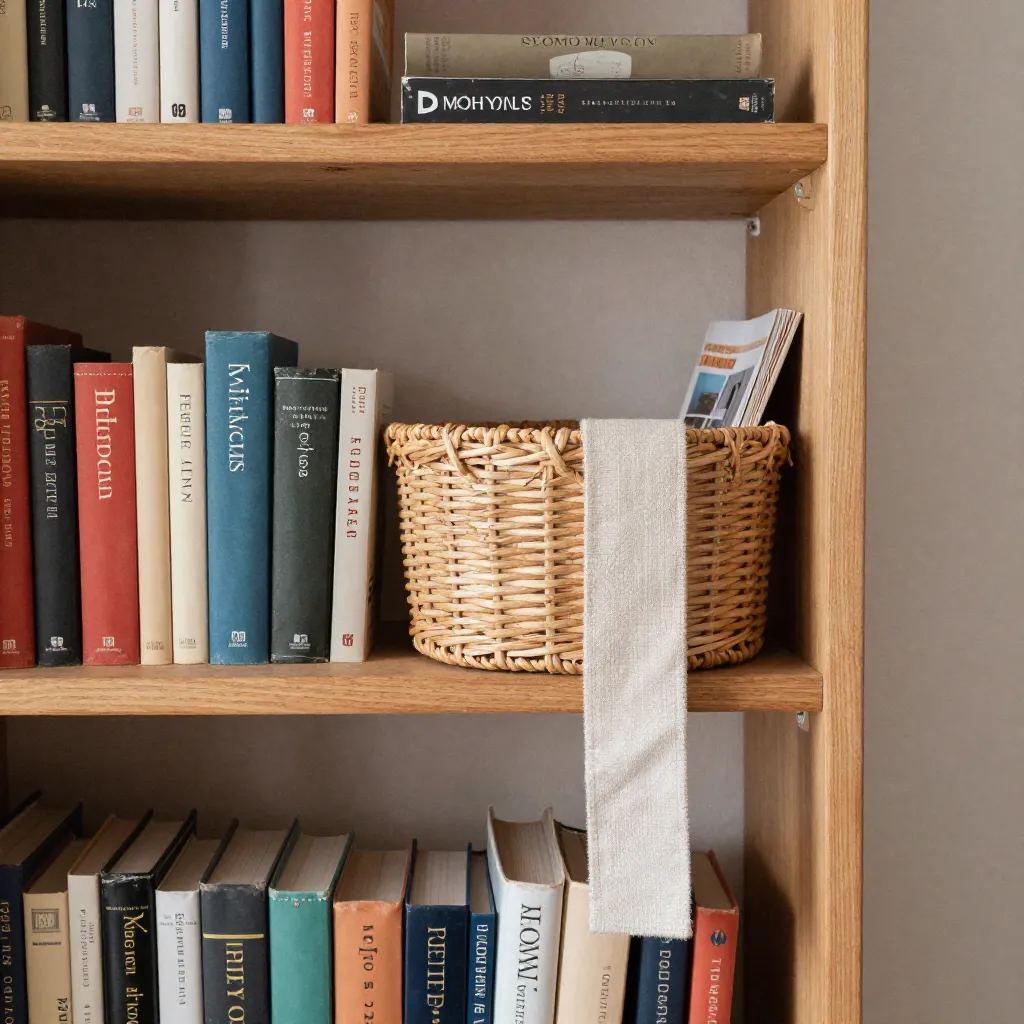
Subject-organized bookshelf display

Intellectual Structure

The arrangement reflects the logical relationships between different areas of knowledge. Each section tells a story about your intellectual interests and reading patterns.

Spines-In: Minimalist System

Minimalist neutral bookshelf arrangement

Neutral Elegance

Books are arranged with spines facing inward, creating a uniform, neutral surface. This approach eliminates visual clutter and creates a clean, unobtrusive display.

Simplicity First

By turning books spine-in, the focus shifts from individual titles to the overall form and structure of the shelf. This creates a minimalist aesthetic that doesn't compete with other room elements.

The uniform appearance allows decorative objects to take center stage, while books remain accessible but visually subdued.

Best For

Those who prefer clean, uncluttered spaces and want their bookshelf to blend seamlessly with minimalist interior design. Ideal for modern, neutral color schemes.

Choosing Your System

Visual Impact

Color-coding creates the strongest visual statement. Subject-logic provides functional clarity. Minimalist offers subtle integration.

Maintenance

Color systems require careful placement of new additions. Subject systems need category management. Minimalist systems are easiest to maintain.

Flexibility

All systems can be adapted. Color-coding can incorporate subject grouping. Subject-logic can include color considerations. Minimalist can be combined with either approach.

Privacy Policy

We respect your privacy and are committed to protecting your personal data. This privacy policy explains how we collect, use, and safeguard your information when you use our services.

Read full privacy policy